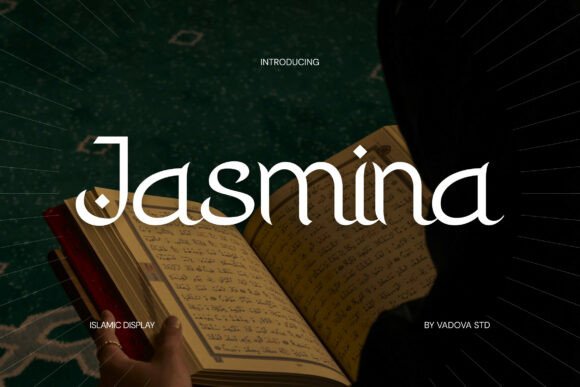
Jasmina Font: Elevating Design with Refined Islamic Typography
In the vast landscape of graphic design and visual communication, typography serves as the silent ambassador of a brand’s identity. When designing for cultural, religious, or luxury contexts, the choice of typeface becomes even more critical. It must bridge the gap between aesthetic beauty and cultural authenticity. This is where Jasmina emerges as a definitive solution. Jasmina is a refined Islamic display font that captures the essence of Arabic aesthetics while remaining accessible to modern designers. Featuring elegant curves and subtle calligraphic influences, it offers a graceful and spiritual visual tone that transforms ordinary text into an expressive art form.
For general readers, designers, and business owners alike, understanding the nuances of Jasmina is essential for creating visuals that resonate deeply with specific audiences. This article explores the design philosophy, practical applications, and technical advantages of this unique typeface, helping you understand why it has become a staple in projects requiring a refined Islamic and cultural aesthetic.
The Intersection of Calligraphy and Modern Display Type
To truly appreciate Jasmina, one must first understand the distinction between traditional calligraphy and digital display fonts. Traditional Arabic calligraphy is a disciplined art form governed by strict geometric rules and fluid stroke modulation. While beautiful, raw calligraphy can be difficult to integrate into standard digital layouts without losing its integrity or legibility.
Jasmina solves this challenge by acting as a hybrid. It is not merely a digitized script; it is a constructed display font inspired by those traditional forms. The design blends decorative serif forms with soft, flowing terminals. This combination creates a typographic voice that feels historically grounded yet functionally modern. The "serifs" in Jasmina are not the rigid brackets found in Western typography; rather, they are organic entry and exit points that mimic the lift and press of a reed pen. This attention to detail ensures that the font carries a spiritual weight without sacrificing the readability required for posters, social media graphics, and packaging.
Defining the Visual Tone: Grace and Spirituality
The primary emotional driver of Jasmina is its ability to convey tranquility and reverence. In design psychology, sharp angles often suggest urgency or aggression, while rounded forms suggest approachability and calm. Jasmina utilizes smooth bezier curves to create a sense of continuous flow. This is particularly significant in Islamic design, where the infinite nature of geometry and script often symbolizes the divine.
When used in headlines or short text blocks, Jasmina establishes an immediate atmosphere of elegance. It avoids the cluttered complexity of some ornamental fonts, opting instead for a clean sophistication. This makes it versatile enough for both solemn religious announcements and celebratory commercial branding. The font does not scream for attention; rather, it invites the viewer to pause and reflect, aligning perfectly with the values of mindfulness and spirituality inherent in its target use cases.
Practical Applications Across Industries
One of the most common questions regarding specialized display fonts is, "Where exactly should I use this?" Jasmina’s versatility extends far beyond niche religious texts. Its refined aesthetic allows it to function effectively across multiple sectors.
Religious Events and Community Branding
Naturally, Jasmina excels in environments dedicated to faith. For mosques, Islamic centers, and community organizations, consistency in branding helps build trust and recognition. Jasmina provides a dignified typographic foundation for:
- Ramadan and Eid Promotions: Creating warm, inviting banners and digital cards that celebrate holy months without resorting to clichés.
- Mosque Signage: Interior and exterior wayfinding that maintains a respectful and cohesive visual language.
- Event Invitations: Wedding, naming ceremony, or fundraising gala stationery that feels personal and culturally significant.
- Educational Materials: Book covers and worksheet headers for Islamic schools or weekend classes.
Luxury Packaging and Editorial Design
Beyond religious contexts, Jasmina taps into the growing market for culturally infused luxury. Consumers increasingly seek products that tell a story and honor heritage. High-end brands utilizing Middle Eastern or North African motifs find Jasmina invaluable for establishing premium positioning.
Consider a luxury skincare line using oud or rose ingredients, or a gourmet food brand specializing in artisanal dates and honey. Using a standard sans-serif font might make the product look clinical or generic. Conversely, using an overly complex calligraphic font might make the packaging illegible on a store shelf. Jasmina strikes the perfect balance, offering legible luxury that signals quality and tradition. In editorial layouts, such as magazines focusing on culture, travel, or fashion, Jasmina serves as an excellent pull-quote or chapter title font, breaking up body text with moments of artistic respite.
Digital Media and Social Content
In the fast-paced world of social media, typography must capture attention within seconds. Jasmina adapts beautifully to modern branding and digital visuals because of its high contrast and distinct silhouette. It works exceptionally well for Instagram carousels, YouTube thumbnails, and website hero sections. Because it carries a calm yet expressive identity, it helps content creators stand out in feeds saturated with bold, aggressive sans-serifs. It signals to the audience that the content within is thoughtful, curated, and culturally aware.
Technical Accessibility and Workflow Integration
A beautiful font is useless if it is difficult to implement. A significant advantage of Jasmina is its technical accessibility. Many fonts marketed as "Islamic" or "Arabic-style" require specialized software, OpenType feature activation, or additional plugins to render correctly. This creates a barrier to entry for beginners or those working in standard office environments.
Jasmina is provided in high-quality standard font formats (typically OTF and TTF). This means it installs like any other system font and works immediately in Microsoft Word, PowerPoint, Canva, Adobe Creative Cloud, and web platforms. There is no need for glyph hunting or manual kerning adjustments to achieve the intended look. This plug-and-play capability democratizes access to refined Islamic aesthetics, allowing small business owners, students, and volunteer designers to produce professional-grade work without a steep learning curve.
Common Misunderstandings About Islamic-Inspired Fonts
As with any culturally specific design element, there are misconceptions that can lead to misuse. Clarifying these helps ensure Jasmina is used respectfully and effectively.
- It is not a replacement for Quranic text: While Jasmina is inspired by Islamic aesthetics, it is a Latin/display font designed for titles, branding, and decorative text. It should not be used to typeset verses of the Quran, which require specific, validated calligraphic scripts to preserve theological accuracy and tajweed rules.
- Cultural appreciation vs. appropriation: Using Jasmina implies a connection to Islamic culture. Designers should ensure their usage is respectful and contextually appropriate. Using an Islamic-inspired font for unrelated or contradictory themes (such as alcohol advertising) would be culturally insensitive.
- Legibility matters: As a display font, Jasmina is optimized for larger sizes. A common mistake is using it for long paragraphs of body text at small point sizes. For extended reading, pair Jasmina with a clean, neutral sans-serif or serif font to maintain user experience standards.
Building a Broader Understanding of Typographic Identity
Ultimately, choosing Jasmina is about more than just selecting a pretty letterform; it is an exercise in cultural empathy and strategic communication. Typography shapes how we perceive information before we even read the words. By integrating a font that embodies the grace, history, and spirituality of Islamic art, designers can create deeper emotional connections with their audience.
Whether you are organizing a community iftar, launching a modest fashion line, or designing an educational curriculum, Jasmina offers a bridge between the past and the present. It proves that tradition and modernity are not mutually exclusive but can coexist in a harmonious visual dialogue. By understanding its roots, respecting its application, and leveraging its technical ease, you can elevate your visual communication from simple messaging to meaningful storytelling.
In a digital age that often prioritizes speed over substance, Jasmina reminds us of the power of slowness, beauty, and intentionality. It is a tool for those who wish to communicate not just with clarity, but with soul.